
In partnership with

Welcome back to the Launch Key 🚀
I hope you enjoyed Labor Day weekend. Remember it started as a way to honor the achievements of American workers. Time will tell if AI lets’ us keep our end-of-summer tradition! 😉
I realize I’m writing about AI an awful lot (see Launch Key Q3 - AI Update). But it seems to be in at least half the business and news stories right now. Druckenmiller’s op ed is just a recent example. But it let’s me riff on a bigger point about old school wisdom – which happens to be the thing that AI can’t replicate … yet.
Let's get into it.
Gmail users may wish to read online since some parts may be clipped.
Take this week’s poll or comment below and let me know if we’re on the right track.
Table of Contents
Pull to Eject
On August 25, Stanley Druckenmiller published an op-ed in the Wall Street Journal titled "Let the Bond Market Speak." It took apart Treasury Secretary Scott Bessent's efforts to hold down Treasury yields. Bessent is a former protégé. The piece landed hard.
Then a reporter asked whether he'd used AI to write it.
"Of course."
And then the line that got far more play than the op ed: "I write everything using AI now for the same reason I use a calculator when I do math problems." Followed by: "I don't know why this is relevant. My name is on the piece. It's my message."
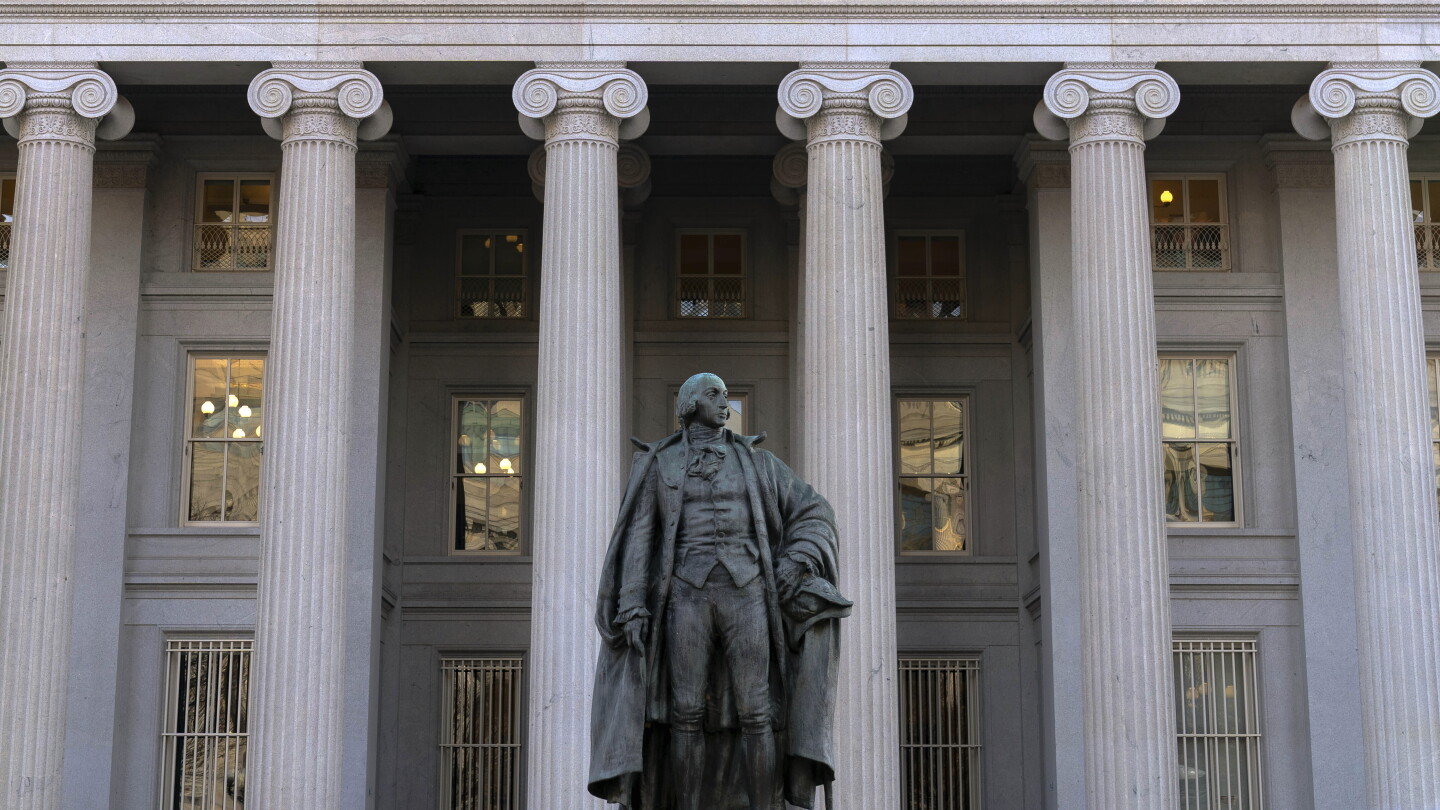
Here's the interesting part. The Journal's opinion editor defended running it on the grounds that AI is acceptable when the published piece reflects the author's own argument and the author has credibility. Earlier last month, the Financial Times had appended an editor's note to a Ricardo Hausmann column for essentially the same practice — a Harvard economist who used AI to condense his own draft — because it violated their code.
Same tool. Two verdicts.
The difference wasn't the technology. It was whose judgment the readers thought they were buying.
Levitt asked this in 1960
Theodore Levitt published his famous "Marketing Myopia" (see Old School Wisdom) in Harvard Business Review the year Kennedy was elected. It went on to sell something like 850,000 reprints, and it asked one question that has never stopped being useful:
What business are you actually in?
His example was the railroads. They didn't decline because demand for moving people and freight collapsed — demand exploded. They declined because their leadership decided they were in the railroad business rather than in transportation. So cars and trucks and planes ate their marketshare, and they never saw it coming, because they were looking at their product instead of at the need.
Revlon's Charles Revson said the same thing in one sentence: in the factory we make cosmetics, in the drugstore we sell hope.
Sixty-six years later there's a new version of the same mistake, and it's spreading fast.
Marketing Myopia 2.0
Look at how people are describing themselves right now. AI-powered. AI-first. AI-native. Prompt engineer. Automation consultant.
Every one of those is a description of a tool, not a business.
The tool is not the business. The output is not the product. The customer's problem is the product — and it was the product before any of this, and it'll be the product after.
If your differentiator is that you use AI, you have no differentiator. So does everyone else. So does your competitor with a bigger compute budget and more time to burn. If you're competing on volume, speed, and cost of production, you have entered a race you cannot win against people who are better capitalized than you and, in some cases, not people at all.
Levitt saw the trap coming, though he assumed the commodity would be steel or cement. His line was that there is no such thing as a commodity. Everything can be differentiated. Failure to differentiate is always a failure of imagination, never a fact about the market.
He was right. He just didn't know the commodity would be words.
The dimension that's left
So which dimension is available now that production is free?
Not the draft. The decision about what's worth drafting.
Not the analysis. The judgment about which analysis anyone should act on.
Not the deliverable. The thirty years of having signed your name to deliverables and been right often enough that someone takes your call.

Marc Andreessen told Joe Rogan in May that we crossed the AGI line months ago, and that models now give better answers than any expert he can call. Take him at his word for a second. If he's right, then the expert layer didn't get erased — it got relocated. It moved from producing the answer to knowing which question to ask, which answer to trust, and whether the buyer will believe it.
That's not just a consolation prize. That's the whole job now. And it happens to be the thing you spent your career accumulating.
Druckenmiller's calculator line is the tell. Nobody hires a calculator. They hired the man holding it — because he's been right about bonds for forty years, and a machine can't inherit that.
The exercise
Three questions. Fifteen minutes. Do them on paper.
1. What business are you actually in? Not what you make. Not what you produce. What changes for the customer when you're done. If your answer contains the name of a tool, start over.
2. If a machine produced your output tomorrow at ninety percent quality and two percent of the cost — what would people still pay you for? Whatever survives that sentence is your actual business. Everything else was scaffolding.
3. What signals your judgment before anyone's bought anything? Levitt's most underrated idea — from The Marketing Imagination — is making intangibles tangible. Nobody can evaluate the quality of your thinking in advance, so they read proxies: how you write, who vouches for you, what you've shipped, what you refuse to take on. Those proxies aren't marketing fluff. In a market flooded with competent output, they're the entire purchase decision.
The railroads had all the track, all the capital, and all the expertise. They lost anyway, because they answered question one wrong.
You've got a real advantage here, and it isn't nostalgia. It's that you've watched this happen before — desktops, the web, mobile, cloud, social. You know the difference between a tool getting cheaper and a business getting obsolete. Most people writing about AI right now have never seen that distinction play out even once.
Answer the three questions. Then go be the person whose name means something at the bottom of the page.
Now go launch something 🚀
If someone you know is sorting out their next chapter — forward this to them. That's the whole ask.
No man was ever wise by chance.
Elon's new company is private. These 3 tickers aren't.

The next Apple may already exist. Insider sources say Elon has spent two years building a secret device inside Tesla's facilities — one he claims will be "10x bigger than the largest product in history."
There's just one problem: the company is private, and unless you know Elon personally, you can't buy a single share. That was true until Guardian's research team found three public ticker symbols sitting in the launch supply chain.
Click here to see all 3 tickers, free of charge.
You won't hear these names on CNBC — Wall Street hasn't published a word on the connection. But when the launch hits September 21, that quiet ends.
Some are already calling this the biggest opportunity since AI. For anyone who missed Apple before the iPhone, this may be a second look at that kind of setup.

Old School Wisdom
In this widely quoted and anthologized article, first published in 1960, Theodore Levitt argues that “the history of every dead and dying ‘growth’ industry shows a self-deceiving cycle of bountiful expansion and undetected decay.” But, as he illustrates, memories are short.

Free Knowledge
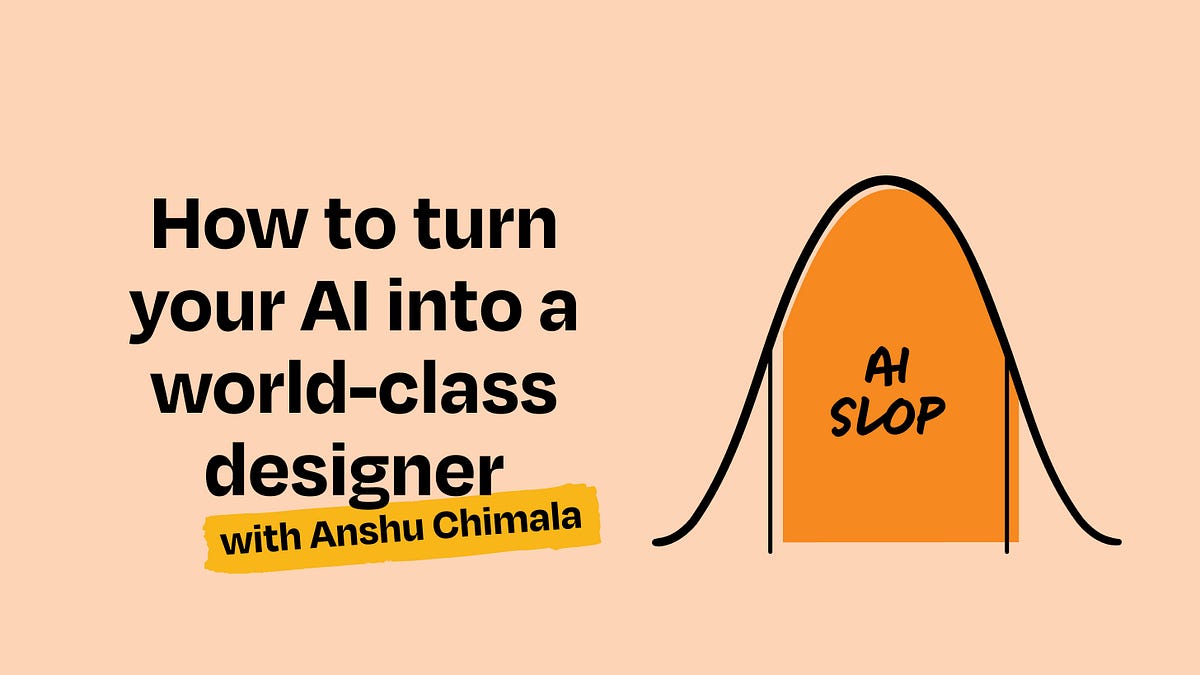
Lenny shared this fantastic post from Anshu Chimala. If you’re still getting mediocre design from AI, you just might be doing it wrong.
Recommendations
📕 MGMT Playbook : Practical management insights straight to your inbox every Wednesday.
🏢 Retirepreneur : Your guide to turning decades of experience into profitable consulting, coaching, or course businesses, without risking your retirement security.
🗃 Dealroom Business Success Uncovered : Learn directly from billionaire entrepreneurs on how to grow a business. Join a community of 2,000+ innovators.
🧾 Redefining Retirement : Too Young to Retire, Too Old To Take Orders? Yeah, Me Too.
🚏 The Cautionary : Learn to challenge conventional wisdom.
Visual Crapshoot


Help me help you: What's the #1 challenge holding back your late career side hustle?
- Financial risk management - can't bet retirement
- Worry that you're not tech savvy enough
- Have connections but unsure how to use them
- Business model selection confusion
- Time management with family obligations
- How to validate product while still employed
- Age discrimination concerns
- Is it too late for my idea?
- Other
Launch Key readers – thank you for your support and feedback. I appreciate each and every one of you as I work to build something you value.
Remember, if there's anything you'd like to share — a recommendation, a story idea, or just a note to say hi, hit the reply button and fire away.
