
In partnership with

Welcome back from the 250th July 4th weekend! 🇺🇸

Is the AI race really taking jobs? Not so fast my friends. 3 months ago, I bought the narrative too, but the actual data (Ramp data 21,000+ firms) is showing something interesting: companies who have embraced the new technology have actually grown headcount. It’s nuanced.
And this week’s example – Ford Motor Company – shows exactly why.
Let's get into it.
Gmail users may wish to read online since some parts may be clipped.
Take this week’s poll or comment below and let me know if we’re on the right track.
Table of Contents
Pull to Eject
Technology should not be the main character.
I've been saying this for thirty years, across four different technology waves: the web, mobile, blockchain, and now AI. It's literally a commodity. It gets hyped early in every cycle, but the value is always somewhere else.
Ford just handed us undeniable proof in a 2026 case study.
Three years ago, Ford went all-in on AI for vehicle quality control — automated design review, smart cameras, the works. Then the results came in:
recalls up
dependability rankings down
warranty costs climbing
So this spring, Ford rehired 350 veteran engineers — what the company itself nicknamed its "gray beard" hires — to fix what the automation alone couldn't catch.

The fix wasn't "add more AI." It was put experienced human judgment back in the loop, rebuild the data feeding the AI, and let the veterans mentor both the junior staff and the machines.
The payoff: Ford topped the JD Power Initial Quality Study for the first time since 2010.
Here's the truth from Ford's own VP of engineering that should be shared in every company chasing an "AI-native" strategy: they'd assumed that feeding design requirements into AI would automatically produce a high-quality product. It didn't.
AI could execute. It couldn't judge.

That's the thesis I’ve been trying to write this year. AI execution gets cheaper and more commoditized every single quarter — that's not a prediction, that's just what happened to the web, to mobile apps, to cloud compute, and every other tool before it.
What doesn't commoditize is the judgment about whether the output is actually right. Whether it solves the real problem. Whether you'd stake your name on it.
That judgment is what Ford's veteran engineers had and the automated systems didn't. It's also, not coincidentally, exactly what you're sitting on after thirty-plus years in the room when things went right or wrong.
Launch Key has been expounding on this recently:
Do you ‘own’ your solution?
There's also an important wrinkle worth paying attention to, even if it doesn't change your week: the AI vendor landscape had its own reminder recently that "rented" and "owned" aren't the same thing.
Anthropic Fable got pulled offline for a few weeks, then restored — and in that window, a wave of open-source competitors, several from Chinese labs, made CIO’s and technologists question the true costs. This preview of regulatory oversight was a warning. Many smart operators quietly asked the same question: what happens to my business if the tool I'm renting changes terms, price, or access overnight?
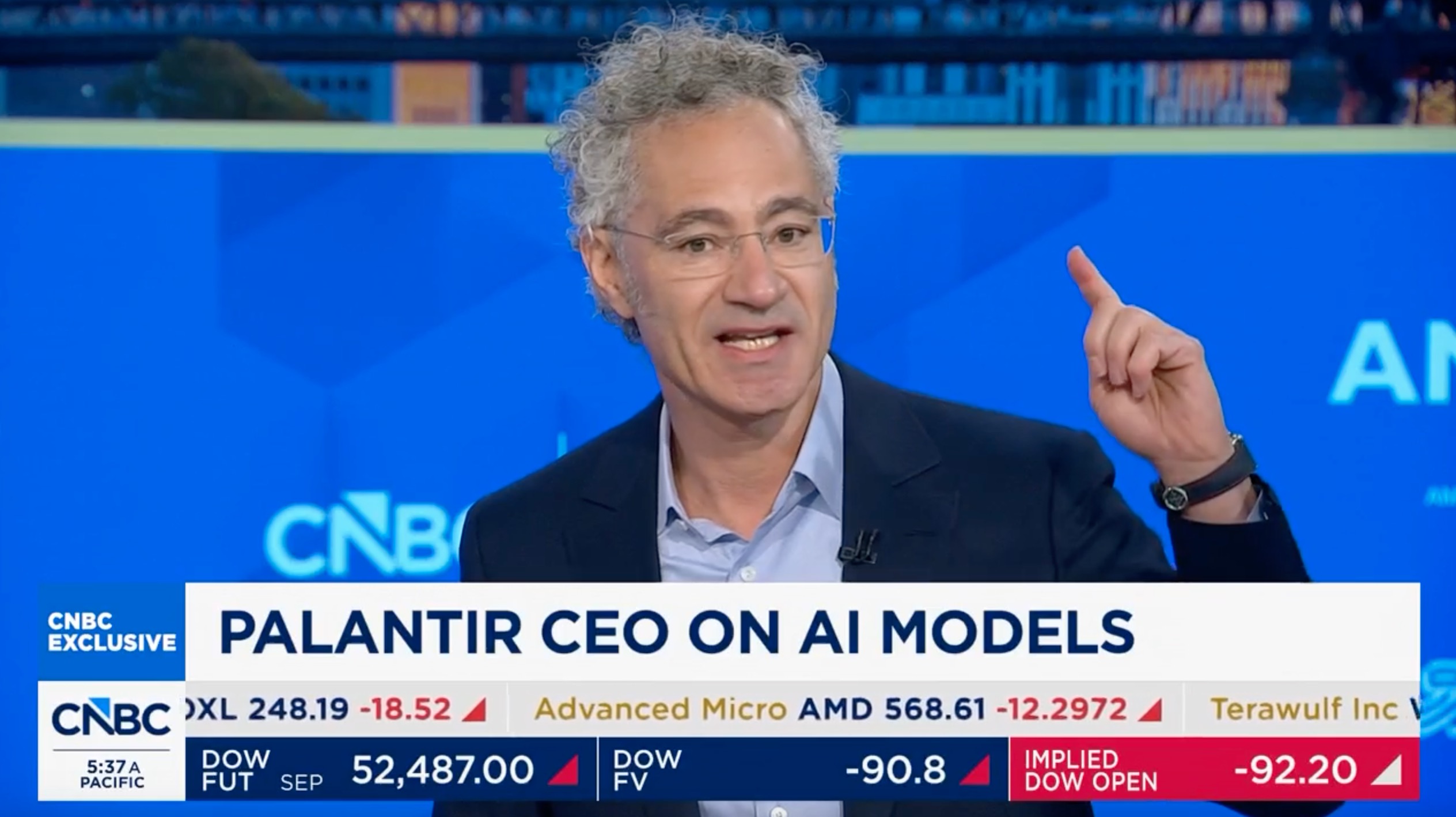
Are local models the future? And strategically, can the models vendor use my intellectual capital to build a future competitor? Alex Karp, Palantir CEO, unloaded on Squawkbox on corporate being furious about the current situation (Free Knowledge).
We’ve seen similar technology stories in the past. Remember WordPerfect and Lotus 1-2-3? Once Microsoft deployed the Windows platform they essentially replaced those market leaders with their own Excel and Word.
Or the 90’s new tech, should I build my own web site? And then later, could I trust outside vendors for applications and hosting? And then back to, building internal departments to manage all of that once it had become mission critical. Skunkworks grow to critical. They get moved to some outsource provider. We question security and who owns our intellectual capital and then move those proprietary apps back inside the firewall. Lather. Rinse. Repeat.
You don't need to solve that this week. But you should know the answer for your own practice. If your system of record, your consulting engine, your content pipeline, or your product roadmap assumes uninterrupted access to one AI vendor, forever, at today's price — that's a dependency worth documenting, not panicking about.
Here's the actual takeaway, and it's simpler than it sounds: don't confuse the tool with the value.
The tools will continue to change — always have, always will. What you built over thirty years of pattern recognition, judgment calls, and knowing which fires are real and which ones burn out on their own — that's not something any model, rented or owned, can replicate. That's the part of your business worth protecting first.
Bet on your judgment. It's the one thing that was never for rent.
Now go launch something 🚀
You can't have everything you want, but you can have the things that really matter to you.
Your site is losing leads. You can't see where.

Your site looks fine to you — and it's still losing leads. SureThing renders any URL in a real browser, scores 9 dimensions, and ranks the fixes by wasted impact.
Old School Wisdom
Greene's core argument is that true mastery — the fused, intuitive pattern recognition that separates experts from true masters — only comes from roughly 10,000–20,000 hours of deeply engaged practice, not raw talent or a tool.

Free Knowledge
During the nearly 20-minute segment, Alex Karp launched into a tirade against rival AI labs OpenAI and Anthropic, accusing them of an "effing insane" business model that overcharges clients for tokens while harvesting proprietary data and compromising U.S. national security. He stated that "something has gone completely wrong" with how AI is sold, arguing that enterprises are losing their competitive "alpha" and that relying on Silicon Valley consensus for military technology is dangerous.

Recommendations
📕 MGMT Playbook : Practical management insights straight to your inbox every Wednesday.
🗃 Dealroom Business Success Uncovered : Learn directly from billionaire entrepreneurs on how to grow a business. Join a community of 2,000+ innovators.
Visual Crapshoot

Help me help you: What's the #1 challenge holding back your late career side hustle?
- Financial risk management - can't bet retirement
- Worry that you're not tech savvy enough
- Have connections but unsure how to use them
- Business model selection confusion
- Time management with family obligations
- How to validate product while still employed
- Age discrimination concerns
- Is it too late for my idea?
- Other
Launch Key readers – thank you for your support and feedback. I appreciate each and every one of you as I work to build something you value.
Remember, if there's anything you'd like to share — a recommendation, a story idea, or just a note to say hi, hit the reply button and fire away.
